Lifeline of the Northern Key Economic Region


The most modern highway in the country connecting Hanoi - Hai Phong with a length of 105.5km is clearly taking shape. It is expected that by the end of May 2015, the first 22km long section of the Hanoi - Hai Phong expressway will be opened to traffic and put into operation. The "finish date" of the project is not far away when many difficulties and obstacles have been removed, and the face of the construction site is changing rapidly.
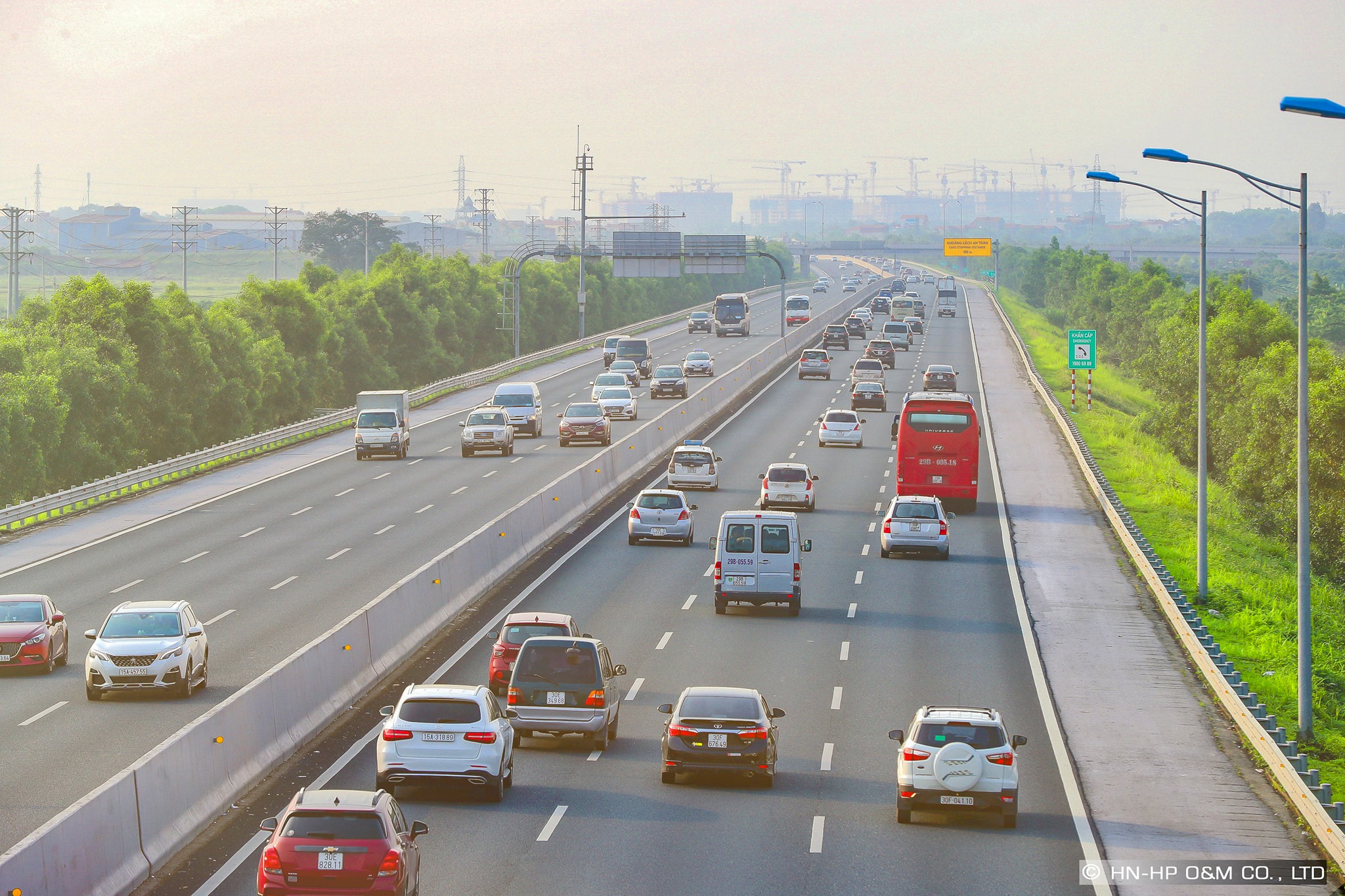
It will be the highway with the highest vehicle density in the country
The Hanoi-Hai Phong Expressway project was established by functional units of the Ministry of Transport in 2003 but could not arrange capital for implementation. Investment in road construction is becoming more and more urgent as traffic pressure weighs heavily on National Highway 5. By 2007, National Highway 5 was at full capacity, congestion often occurred, affecting traffic in the Northern Key Economic Region. Faced with that urgent need, in 2007, the Government Standing Committee assigned the Vietnam Development Bank (VDB) to preside over mobilizing project investment capital in the form of BOT (build-operate-transfer). Vietnam Infrastructure Development and Financial Investment Corporation (VIDIFI) was established to be the project investor.
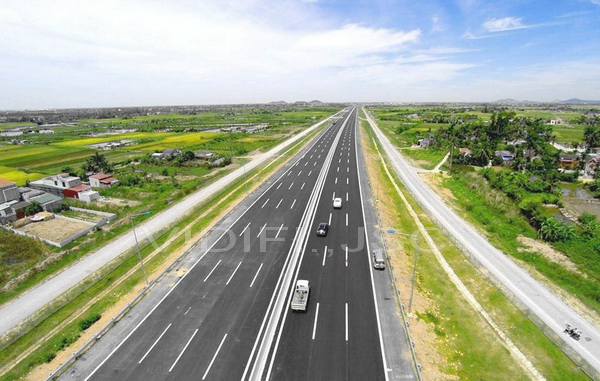
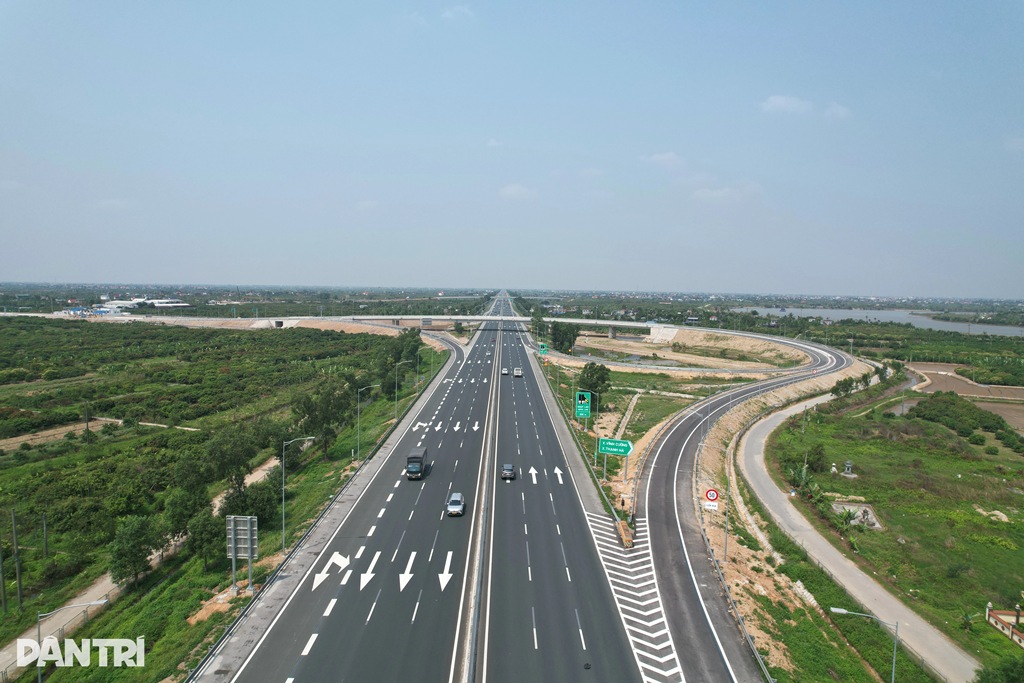
Hanoi - Hai Phong expressway viewed from above (Photo: Doan Viet Ha)
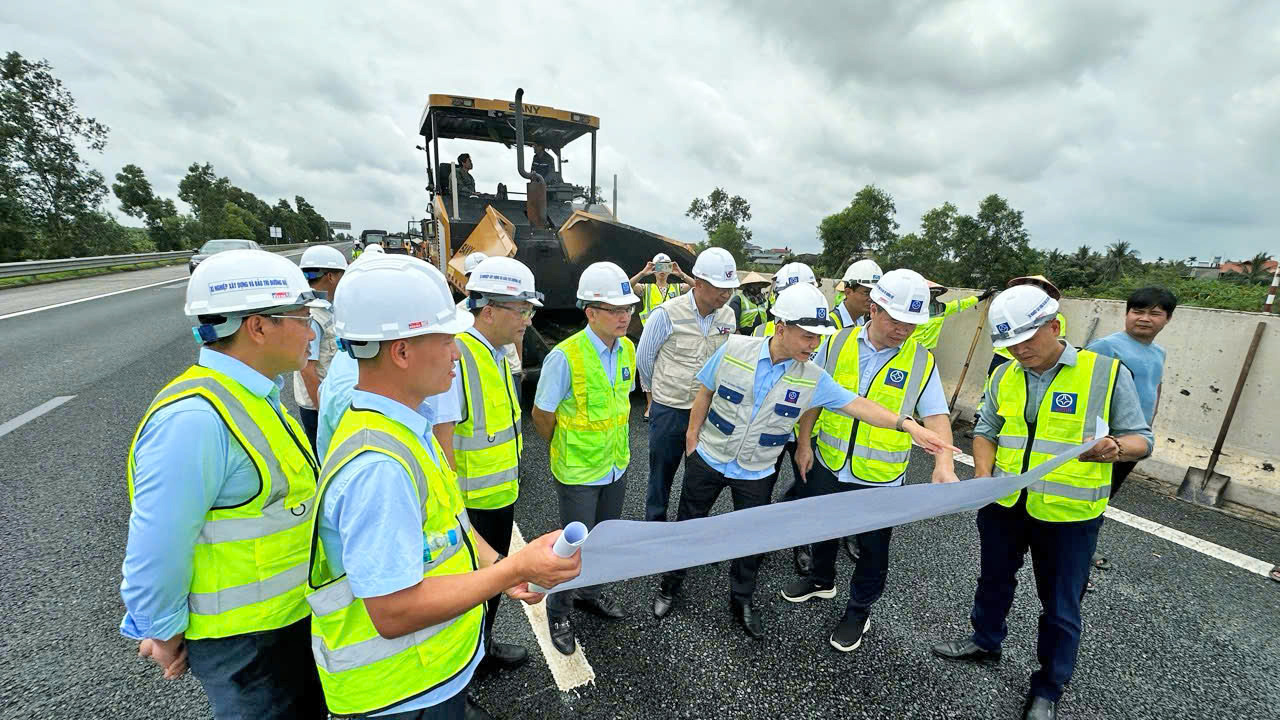
The long-awaited route officially started construction in 2008. After 6 years of construction, up to now, the shape of the arterial road is clear, the 22.7km long route in Hai Phong will be the first section to "reach the finish line". The spacious road opened before our eyes with 6 motor vehicle lanes, 2 emergency stop lanes, median strip in the middle, reaching the most modern scale in Vietnam. The smooth, flat layer of asphalt helps vehicles circulate smoothly at a design speed of 120km/h. The route applies a number of international standards, notably the rough polymer layer applied on the surface. According to Mr. Nguyen Ba Hung, Director of the EX19C Executive Board, in charge of constructing the rough plastic layer, this coating has a softening temperature of up to 87oC, exceeding the highest outdoor temperature of the road surface. The rutting test on the polymer layer gives good results and can prevent rutting. This coating helps vehicles travel safely. When braking suddenly, the vehicle will stop completely and not create streaks.
Construction quality is one of the top requirements for this project. Mr. Dao Van Chien, Chairman of the Board of Directors of VIDIFI, said that the project is regularly inspected and supervised by the State Acceptance Council, and the investor also organizes an internal monitoring system. Right from the design, it was determined that this is the highway with the highest traffic volume in Vietnam, the vehicle's axle load is also the highest, with absolute lane separation, so if quality is not guaranteed, it will be difficult to avoid damage and rutting. The process of implementing the Hanoi-Hai Phong expressway project in reality encountered many difficulties and obstacles. As for site clearance, some sections of the route are 3 years behind schedule. The project's site clearance scale is up to about 1,430 hectares, including 115 hectares of residential land, affecting 2,600 households with residential land and 35,000 households with agricultural land. In addition, the project is implemented in complex geological conditions, about 80% of the alignment must be treated with soft soil, with loading and consolidation time ranging from 6 to 18 months. Up to now, when the project has entered the sprint phase, there is still a section of the route that has not subsided and must be unloaded for construction to ensure progress. This section of the route will continue to be monitored and compensated for subsidence during the exploitation process.
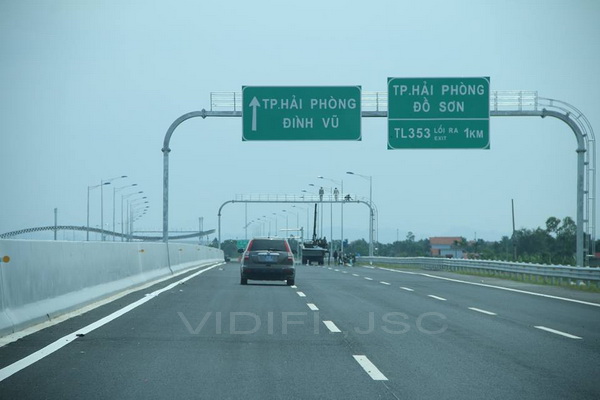
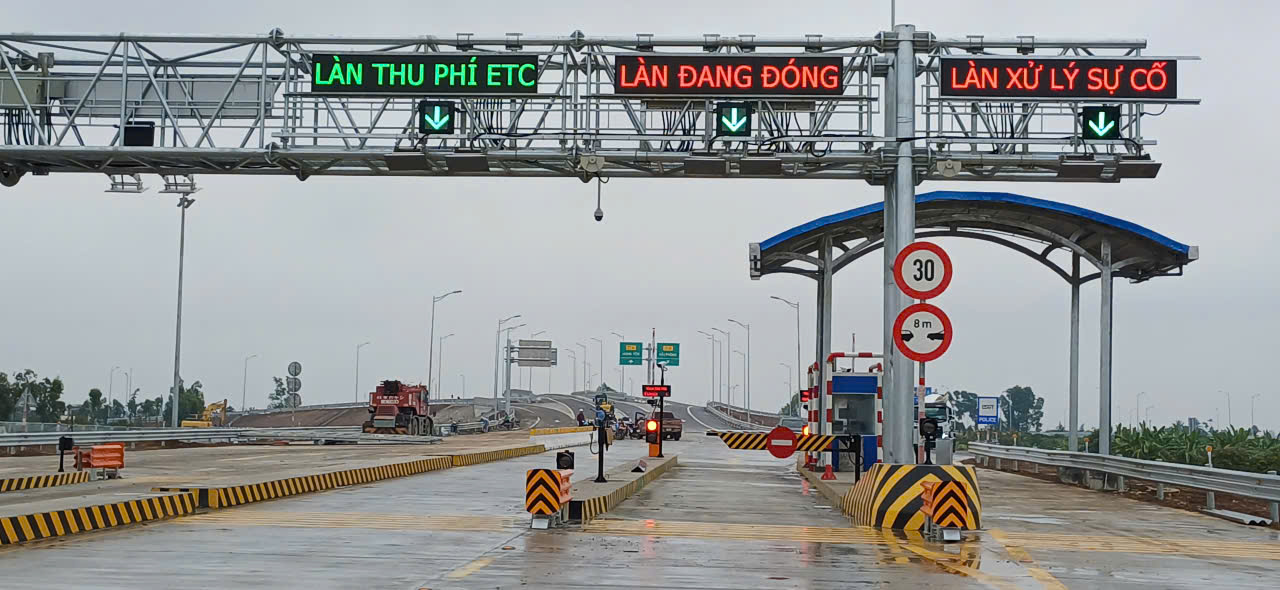
The route section is put into operation of the Hanoi - Hai Phong expressway (Photo: Thinh Ngo)
Investors can pay back their capital in 30 years
As the first expressway project implemented in the form of BOT in the country, the greatest effect that the project will bring is that it will create motivation for the entire Northern key economic region, satisfy the rapidly increasing transportation demand, and shorten travel time between Hanoi, Hai Phong and other localities. In the financial plan, the issue of capital recovery is raised in addition to harmonizing the interests of the State and society. In 2014, the total investment of the updated and approved project was more than 45,400 billion VND. To pay back capital for this project, the expected toll rate is 2,000 VND/km/PCU (standard vehicle), the toll collection period is about 30 years. The Prime Minister has approved a number of financial mechanisms and State support policies for this project to ensure a feasible financial plan.
Currently, in our country, there are a number of highway projects put into use and are being implemented. The investment rate of each project is different depending on the scale, nature, construction conditions... For the Hanoi-Hai Phong expressway, the investment rate converted to a 4-lane highway is about 10.84 million USD/km. This number is considered reasonable for a modern route, applying a number of international standards to the design. This expressway is one of the projects that concretizes the policy of attracting socialized capital to invest in transportation infrastructure. From there, it contributes to solving urgent transportation needs, perfecting the infrastructure network, enhancing connectivity not only domestically but also with countries in the region.
The Hanoi - Hai Phong expressway has its starting point on Ring Road 3 (Hanoi), more than 1km north of Thanh Tri bridge, passing through Hung Yen and Hai Duong provinces, reaching the end point at Dinh Vu port (Hai Phong). The route is 105.5km long, is a type A highway, design speed is 120km/h, road surface width is 33m with 6 main lanes, 2 emergency stop lanes, 2 sides have front roads and green tree strips. In the immediate phase, the project has 6 intersections connecting with localities; 19 intersections at different levels; 104 underground sewers for people's lives. On the route there are 41 bridges with a total length of 12km, of which there are many large bridges such as Thanh An bridge (963m long), Lach Tray bridge (1,252m), Thai Binh bridge (822m).
Source: MANH HUNG (People's Army)