Hanoi - Hai Phong Expressway Project: Completion of site clearance work


Transport development is always a strategic step in socio-economic development in many countries around the world. In developed countries, transportation is always one step ahead, creating a premise for socio-economic development.
In Vietnam, in the northern key economic region, the need to build a highway to relieve congestion on the currently overloaded National Highway 5 is very urgent, both to meet the rapidly increasing transport demand and to shorten travel time between Hai Phong city and Hanoi and other provinces. The formation of this expressway will connect existing economic zones and industrial clusters, create conditions for the development of new industrial zones in the Northern key economic region, and create conditions to exploit economic potential to serve the development of people's livelihood, tourism, culture and society. In addition, in terms of foreign affairs, the Hanoi - Hai Phong expressway will combine with the Kunming - Lao Cai - Hanoi expressway and the Nam Ninh - Lang Son - Hanoi expressway to form a trans-Asian transport system, promoting the region's socio-economic development.
The project to build the Hanoi - Hai Phong expressway was directed by the Ministry of Transport in 2002, but by 2007 it had not been implemented due to lack of investment capital. Therefore, on September 27, 2007, the Prime Minister issued Decision 1621/QD-TTg on a number of pilot mechanisms and policies for investment in the Hanoi - Hai Phong expressway project, which assigned the Vietnam Development Bank (VDB) to preside over the joint stock commercial bank for foreign trade of Vietnam (VCB) in mobilizing capital, and at the same time assigned the Vietnam Infrastructure Development and Financial Investment Corporation to preside over and coordinate with the Vietnam Joint Stock Commercial Bank for Foreign Trade (VCB) to mobilize capital. Nam (VIDIFI) is the investor to implement the Hanoi - Hai Phong expressway project and a number of infrastructure projects synchronized with the expressway in the form of BOT.
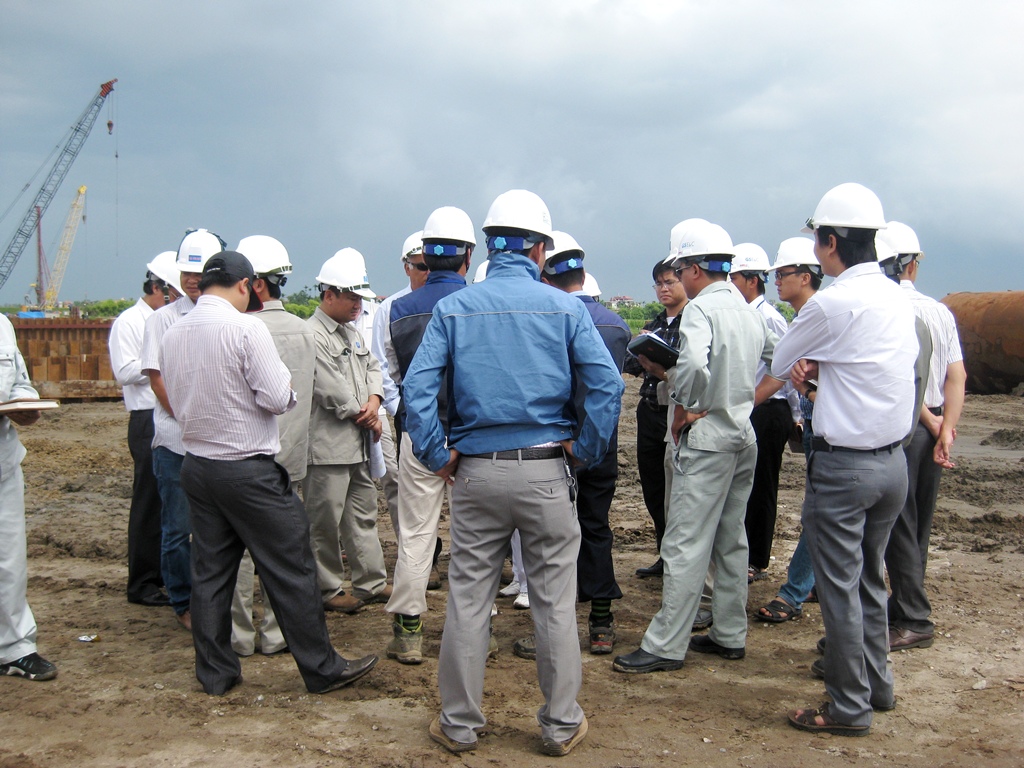
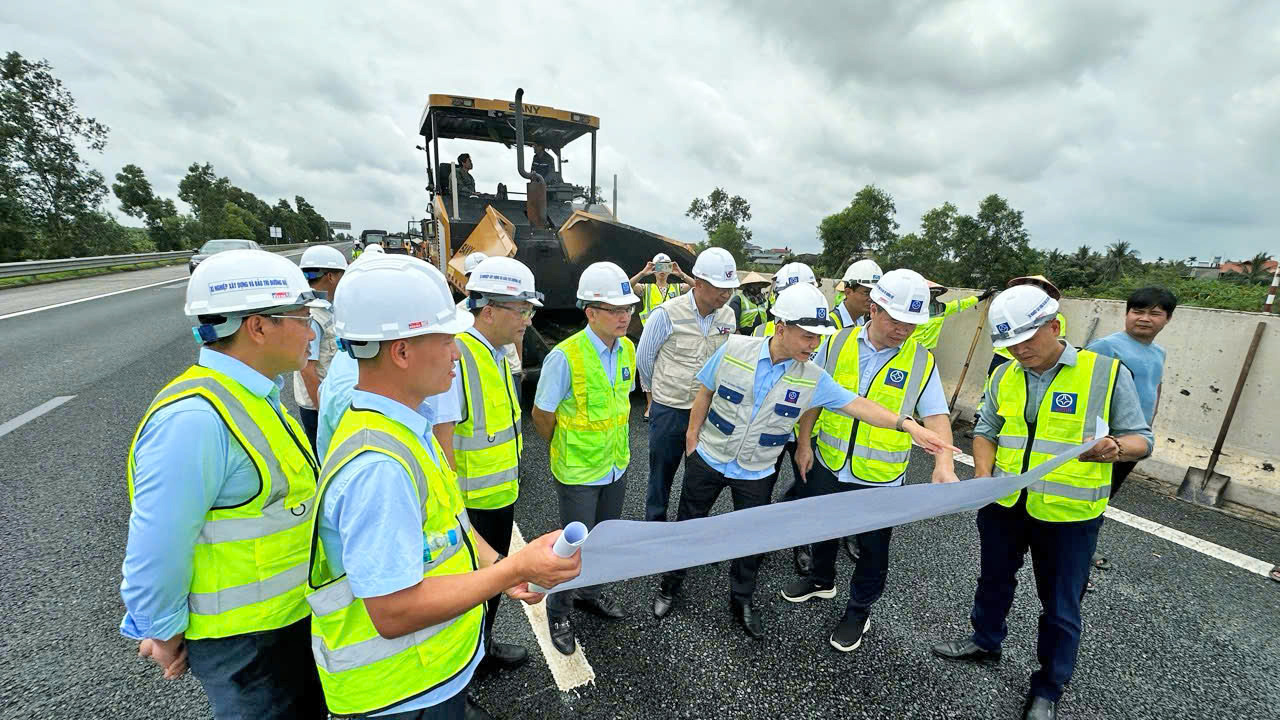
Briefing session at the construction site between key staff of VIDIFI.
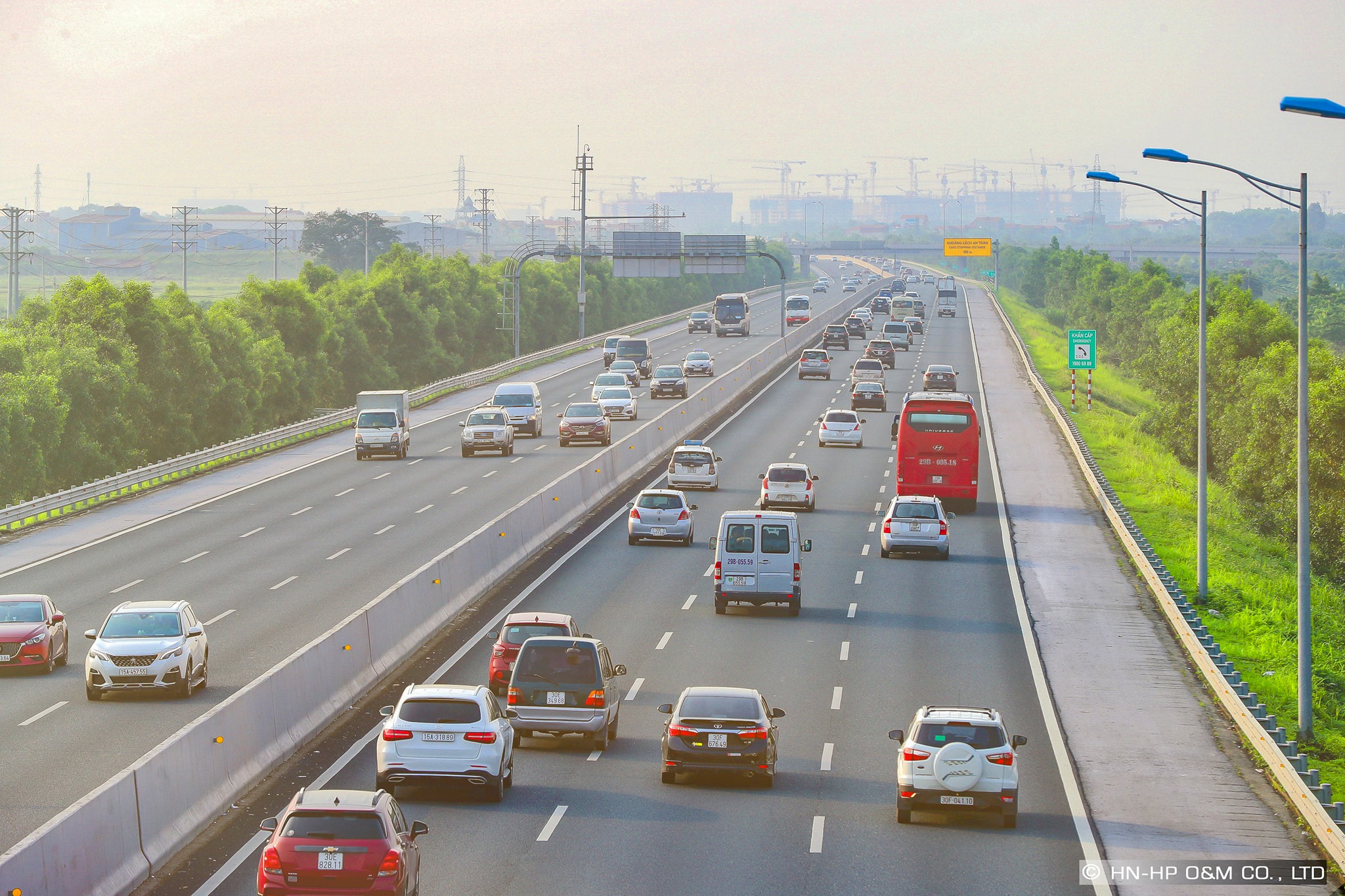
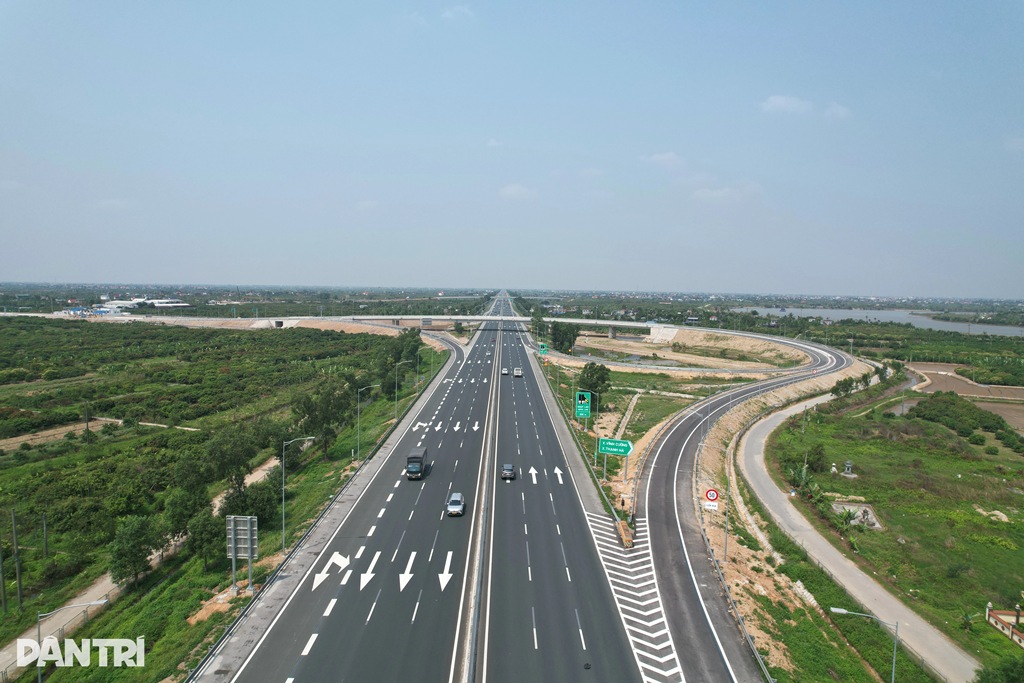
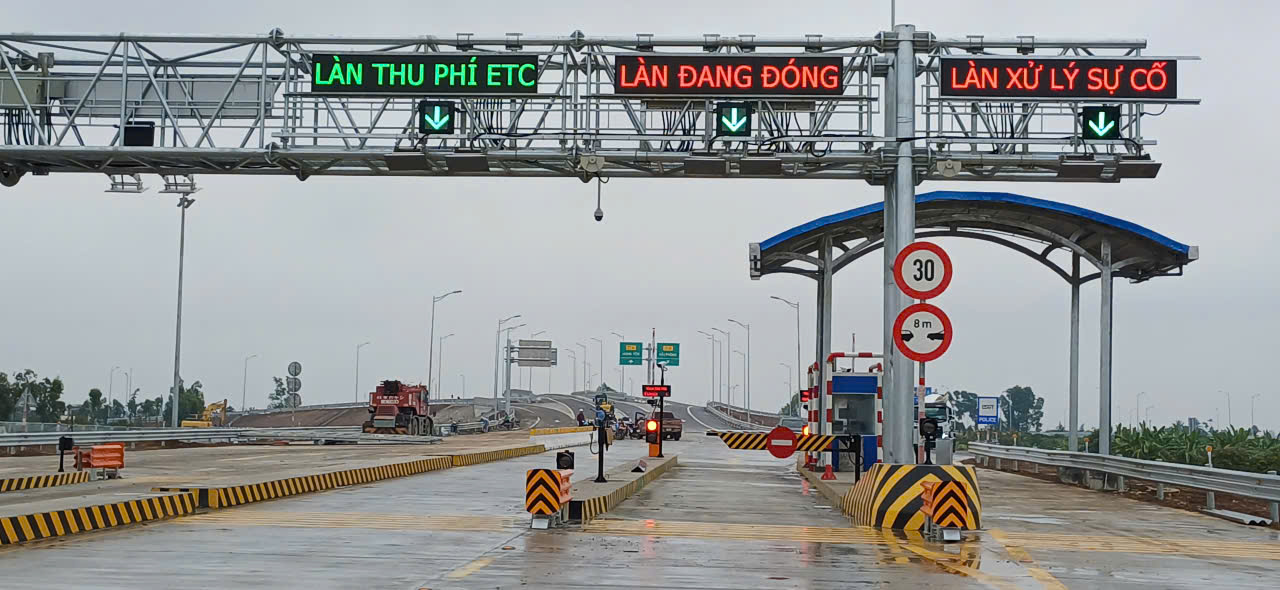
This is a key national project of the transportation industry, the first motorway project in Vietnam to apply a number of international standards: a type A highway, design speed of 120 km/h, with six main lanes, two emergency stop lanes, toll collection in a closed form, both sides have a system of feeder roads connecting with localities and two strips of green trees. The scope of site clearance is 100 m, of which the cross section of the main road is 33 m wide, the total length of the route is about 105.5 km. The project goes through four provinces and cities: Hanoi, Hung Yen, Hai Duong and Hai Phong. The project's starting point starts from Ring Road III of Hanoi city, about 1,025m from Thanh Tri bridge abutment. The project's final destination is at Dinh Vu, Hai An district, Hai Phong city. In early 2015, when connected to the Hai Phong - Quang Ninh highway (about 25 km), it only takes about 1 hour and 30 minutes from Hanoi to Quang Ninh. With the project scale of more than 40 million m3 of excavation and earthwork, it can be said that the Hanoi - Hai Phong expressway project is the largest transport infrastructure project ever in the Red River Delta.
The route passes through four provinces and cities. Land clearance work of the Hanoi - Hai Phong expressway project is assigned to the People's Committees of the provinces and cities through which the project passes as the investor to implement the site clearance and resettlement sub-project under the direction of the Prime Minister; While waiting for project approval, it allows the People's Committees of provinces and cities to carry out compensation, support, resettlement, and site clearance work according to the alignment and cross-section in the basic design that has been appraised by the Ministry of Transport...
To meet the project implementation schedule, site clearance work for the Hanoi - Hai Phong expressway project is divided into two phases. Accordingly, the area needing site clearance for phase 1 (according to the project's main route) is about 1,100 hectares, site clearance work for phase 2 (mainly intersections and overpasses) has an area of about 350 hectares. The amount of land clearance required for both phases of the project is about 1,450 hectares, including: 115 hectares of residential land, the rest is mainly agricultural land and other land (households affected by the project are about 2,000 households with residential land and about 14,000 households with agricultural land), about 9,000 graves, three pagodas, one petroleum pipeline, nine high-voltage power lines from 110 to 110 meters must be moved. kV to 500 kV and hundreds of medium and low voltage power lines from 0.4 to 35 kV as well as fiber optic cables, communications, domestic water lines, irrigation systems...
Aware of the difficult and complicated nature of land clearance work of the country in general and of the Hanoi - Hai Phong expressway project in particular, the Party Committees and People's Committees of provinces and cities, and the investors of the land clearance subproject of the Hanoi - Hai Phong expressway project have entered into a fierce battle with the synchronous participation of the entire political system. Localities always focus on coordinating with the investor to propagate and mobilize people in the project area to clearly understand the purpose and meaning of the project as well as the Party and State's guidelines and policies on compensation, support, and resettlement in order to create consensus and support from the people who have been repossessed to carry out the project, combined with publicity and transparency of mechanisms and policies for people to know, implement, and monitor. At the same time, the People's Committees of the provinces and cities where the project passes through also regularly inspect the site to evaluate the results achieved and find solutions to overcome difficulties during implementation; Leaders of districts, wards, and communes also regularly organize direct dialogues to resolve people's petitions, proactively research and propose maximum application of policies to support people whose land is recovered on the basis of provisions of law, ensuring fairness and harmony of interests between the people - the State and project investors.
In addition to the drastic participation of party committees at all levels, authorities and political organizations and unions in localities where the project passes through, site clearance work of the Hanoi - Hai Phong expressway project also received the attention and direction of leaders of the National Assembly, the Standing Government and relevant ministries and branches. After field inspections, working meetings with investors of the site clearance sub-project of the Hanoi - Hai Phong expressway project or meetings of the State Steering Committee of key works and projects in the transportation industry, the leaders have all given instructions to specifically resolve problems and difficulties in mechanisms and policies in a timely manner. The Ministry of Transport established a Steering Committee with a Deputy Minister in charge of directly monitoring and giving opinions to direct the Investor to handle problems. The Ministry of Industry and Trade directed Vietnam Electricity Group and Vietnam Petroleum Corporation to move high voltage power lines and petroleum pipelines outside the project scope... This is considered a success, affirming the efforts of the entire political system from the Central to the localities.
Although the project passes through many residential areas, technical infrastructure and dense spiritual works such as temples and graves, up to now the site clearance work of the Hanoi - Hai Phong expressway project has basically been completed.
Compared to other transportation projects, the site clearance progress for the Hanoi - Hai Phong expressway project is considered quite fast. In particular, do not allow serious protests or complaints to occur, and do not affect security and order. However, compared to the plan proposed by the Prime Minister, site clearance for the project was also delayed by two years due to a number of difficulties and obstacles both subjectively and objectively. Objectively, because the project is piloted with a number of mechanisms and policies in phase 1, land acquisition is based on the Basic Design. In phase two, after completing the technical design, there were additional problems arising due to practical requirements to readjust the design and re-install land clearance markers. On the other hand, the project goes through soft land that must deal with subsidence, so the construction of underpasses and canals returned to the locality is not on schedule, causing frustration, leading to people preventing the contractor from constructing as in some bidding packages. In addition, site clearance work has been carried out over many years, annual compensation prices change and differ between localities; The State's mechanisms and policies on compensation and support still have inadequacies and changes, leading to people's questions and complaints about compensated land prices and causing difficulties in land recovery. In some places, because previous land management still had many shortcomings, determining the origin of land to calculate compensation prices for households is very difficult; Procedures for building resettlement areas in localities also have many problems... leading to slowing down the project's land clearance progress.
Subjectively, although land clearance subproject investors have made many efforts and determination, sometimes in some places there are limitations such as: pushing responsibility; The relocation of technical infrastructure works is still complicated and prolonged, the resolution of complaints from local people is still slow...
In some places recently, there has been a situation where people have re-encroached the handed over land, hindering construction contractors, affecting the progress of project implementation as well as security and order at the construction site. Therefore, the project needs the attention and direction of relevant ministries, branches, People's Committees of provinces and cities and the active support of local people where the project passes through to complete the site clearance work of the Hanoi - Hai Phong expressway project. The Vietnam Development Bank, assigned by the Prime Minister to preside over mobilizing capital for the project, has committed to providing enough capital to carry out the project on schedule.
In the last days of October, after completing site clearance work, contractors focused heavily on machinery and equipment to deploy construction and committed to speeding up progress, striving to complete the project by the end of 2014.
NGUYEN THANH LIEM(Propaganda Department of the Party Committee of the Central Business Sector)
According toPeople's Electronic Newspaper