Hanoi-Hai Phong Expressway: Don't trade quality for progress


Right after the Tet holiday, Vietnam Infrastructure Development and Investment Finance Corporation (VIDIFI) has focused resources and continued implementing the Hanoi-Hai Phong Expressway Project (HN-HP), aiming to catch up with the peak construction season, bringing the project to its destination on schedule and ensuring quality.
Strategic vision
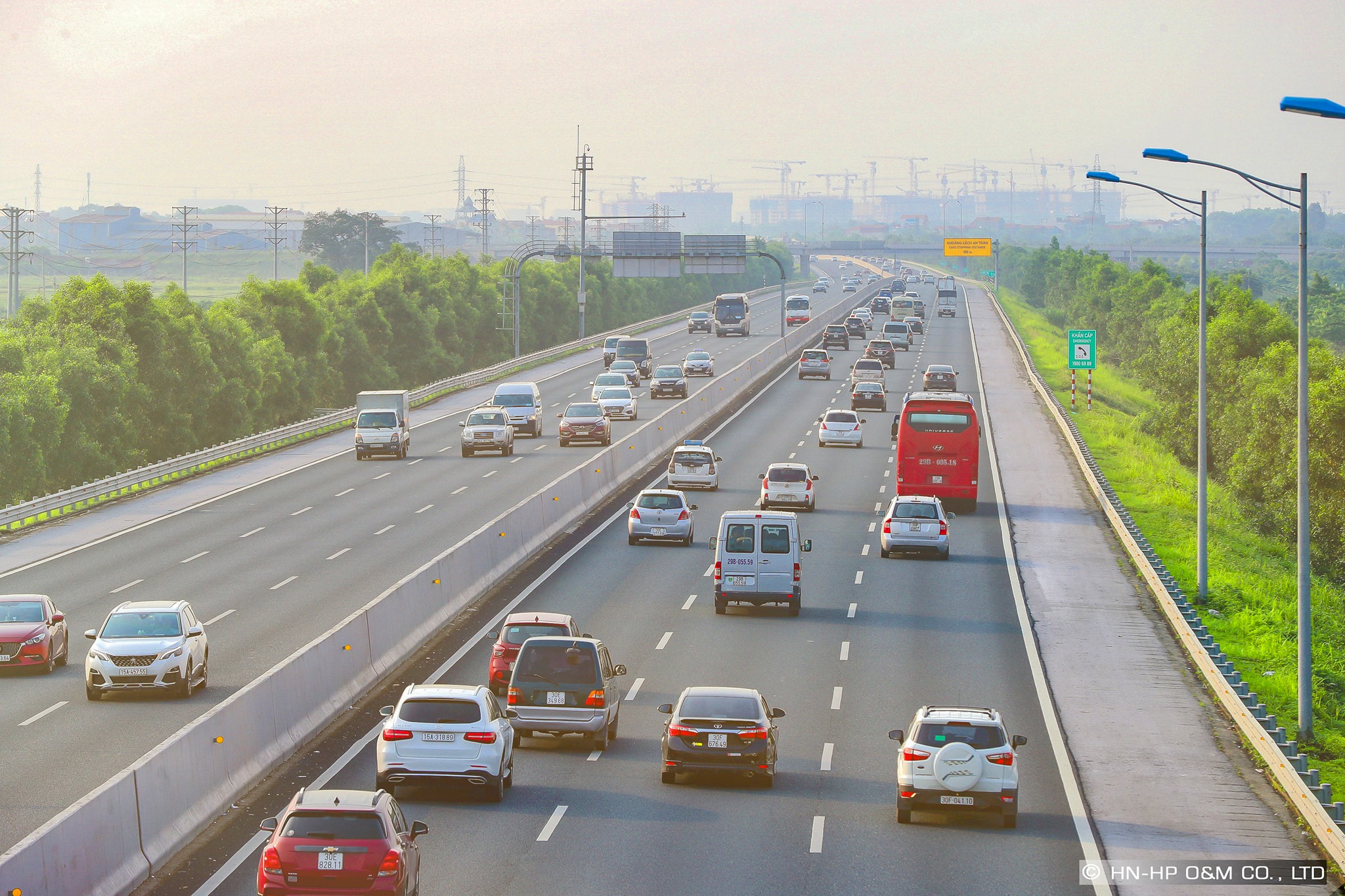
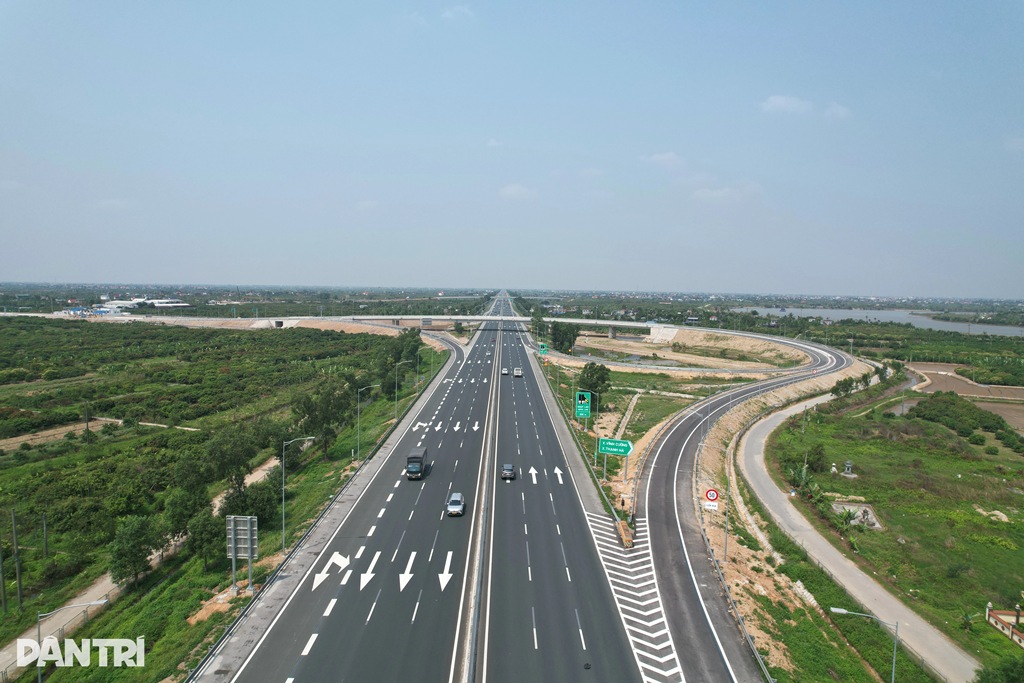
The Hanoi - Hai Phong expressway project is a key national transportation project, with a total temporarily approved investment of VND 24,566 billion, the investor is VIDIFI. This is the most modern highway in our country, with 6 traffic lanes and 2 emergency stopping lanes, the design speed reaches 120km/h, and is also the first highway to be deployed in the form of BOT.
The implementation of pilot investment in highway construction, not using budget capital but mobilizing from social resources, has demonstrated the strategic vision and correct thinking of the Government. This is also a breakthrough, creating a premise to continue investing in the construction of other transportation infrastructure projects across the country.

Construction of Lach Tray bridge on Hanoi - Hai Phong highway. Photo VGP/Viet Hai
According to planning, it will take until 2020 to have a four-lane Hanoi-Hai Phong expressway. But realizing the urgent need to have a new expressway, reducing the load on National Highway 5, which is in a seriously overloaded state, and creating a lifeline, contributing to the implementation of the socio-economic development strategy of the Northern key economic region, the Government assigned the Vietnam Development Bank (VDB) to organize the implementation of the project, contributing 51% of the charter capital to establish VIDIFI to invest in the route.
Now, after more than 6 years of implementation, the project has begun entering the main construction phase. The completed project will contribute more motivation to the socio-economic development of the Northern key economic region in particular and the country in general.
Huge construction
We conducted a survey along the route in the early days of spring, in the bitter cold of the Northeast monsoon. The first impression is the majestic highway, like a large dyke stretching through the countryside, the pale green fields of young rice.
Answering our questions, Acting Director of the Project Management Board Pham Viet Son confided: The road has linked and drawn together the regions of the country, but at the same time it has also divided many countryside throughout its length.
To erase that separation and also facilitate people's travel, 124 sewers were built along the route. In addition to the number of more than 30 large bridges, and ensuring the slope of the road is no more than 2% according to safety standards, the new road is built that high.
This is truly a giant project, with more than 40 million m3 of soil and rock used, because the sole purpose is to ensure the quality of the project as well as convenient transportation for the people.
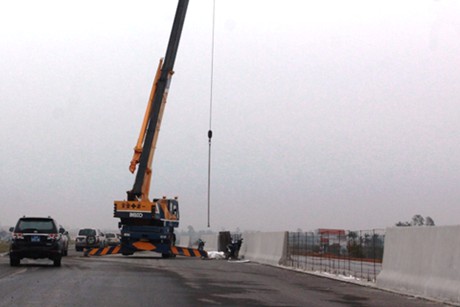
Completed construction of the plastic surface at the beginning of Hai Phong (November 2013). Photo: VGP
Eternal scale
General Director of VIDIFI Corporation Nguyen Van Tinh said: In the future, when calculating vehicle traffic for 2025, high pavement structural strength is required, asphalt concrete pavement layers must reach a thickness of about 45 cm. Due to its permanent scale, most of the road lies on weak geological foundation (95%), so many locations have to be drilled up to 40 m deep to make sand piles, adding load to wait for settlement.
Although very impatient with progress, the investor still has to wait for subsidence to stop before allowing the contractor to construct. Although we always try to speed up the progress of the project, quality issues must be given top priority. "Quality cannot be exchanged for progress," Mr. Tinh asserted.
At the Thanh An bridge construction site under the EX-7 contract package managed by the Korean GS Engineering and Construction Group, it is easy to see the image of construction workers rushing back and forth, amid the lively discussion and discussion of Vietnamese and Korean engineers. Deputy Director (Deputy Director) of the EX-7 package Kim Chuang Hwan, a Korean engineer, said: The EX-7 package is 9.3 km long in total, with two large bridges across the river, Ba La 376m long, and Thanh An 963m long (applying Super-T beam technology).
To ensure the progress and quality of the project, the contractor mobilized all workers from the 6th day of Tet, deploying construction on all fronts, in order to achieve the set construction speed. The current work is to complete the T10 pillar, which will be completed by next June, and it is expected that by the end of this year, the main route will be open to traffic.
Deputy Director of EX-9 package Luu Quang Xuan, engineer of Shandong Provincial Road and Bridge Group, China, said: Currently, the entire roadbed of the EX-8 package has been loaded to prevent subsidence,... Currently, the EX-8 package has completed 66% of progress, the contractor will continue to launch comprehensive construction, focusing on machinery and workers, ensuring the completion of the package by the end of this year.
Sharing about the difficulties during the construction process, Deputy Director of EX-8 package Do Hai Luan said: The biggest difficulty was when constructing bridge B08 across Da Do river, due to weak soil, it had to be drilled deeper so the rock was harder than 40m, requiring high technology and a lot of effort. As for other items, the application of many modern machines has helped increase the speed and efficiency of construction as well as improve the quality of the project.
It is known that the biggest cause slowing down the progress of the project is the site clearance work. After close direction from the Government, as well as the determined participation of the People's Committees of the provinces and cities where the route passes, it is now basically completely resolved, nearly 1,400 hectares of "clean land" have been handed over to the investor to carry out construction.
There are still some problems related to contractor capacity, the project still has a situation where contractors do not ensure enough equipment and personnel to execute the package but instead hire subcontractors, equipment, and personnel in Vietnam at low prices... which have been basically overcome by the investor, ensuring the construction of the entire route meets progress and quality.
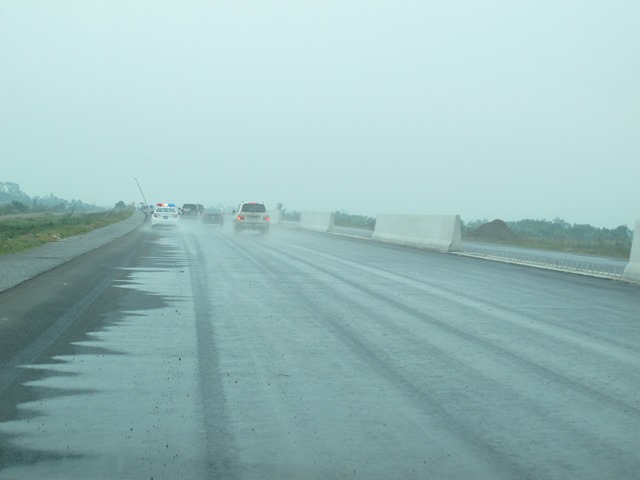
The convoy tested the completed road section in Hai Phong in November 2013. Photo: VIDIFI
New driving force promotes socio-economic development
The completed project will create a vital road connecting the provinces and cities that the route passes through, reducing the load on the old road 5, which is now seriously overloaded, to meet the increasing transport demand. At the same time, it shortens travel time between Hanoi economic zone, the Northwestern mountainous provinces and the port city of Hai Phong, creating conditions to exploit economic potential, develop people's livelihood, and promote socio-economic development.
At the same time, after completion, the route will be combined with other national and provincial highways to form a smooth road traffic network, creating a driving force for development in all aspects of the Northern key economic triangle, connecting with the Hanoi-Lao Cai and Hanoi-Lang Son highways to build a goods circulation route from Hai Phong port to the Western provinces of China.
Talking about this path, Chairman of the Board of Directors of Vietnam Development Bank Nguyen Quang Dung shared: Implementing the project ahead of the expected schedule (2020) not only contributes to creating great socio-economic benefits, but also affirms the strategic vision and correctness of the Government's determination to overcome the general difficult situation of the domestic and world economy, effectively using resources mobilized from society and foreign direct loans for investment. infrastructure development in Vietnam.
The Hanoi - Hai Phong expressway is 105.5 km long, passing through the provinces and cities of Hanoi (6.2 km), Hung Yen (26.8 km), Hai Duong (39 km) and Hai Phong (33.5 km). The route's starting point is on Ring Road three (Hanoi), 1025m from the northern abutment of Thanh Tri bridge, directly connecting to Long Bien-Thach Ban road, 40m wide; The final point is Dinh Vu port, Hai An District, Hai Phong City.
Hanoi - Hai Phong Expressway is built according to international standards, type A highway, design speed reaches 120km/h (currently the highest in our country) with 6 traffic lanes and two emergency stopping lanes, roadbed width is 33m.
On the entire route, there are 9 large bridges crossing the river, 21 medium bridges and 22 overpasses at intersections; All bridges are permanently built with reinforced concrete, able to withstand earthquakes of levels 7 and 8. The road surface is made of 5 layers, including a 40cm first-class crushed stone layer, 12cm black crushed stone layer, 14cm medium-grained asphalt concrete (BTN) layer, 5cm fine asphalt layer and 3cm rough asphalt layer.
According toGovernment electronic information portal