The shape of the arterial road


The Hanoi - Hai Phong expressway has the most modern standard scale in our country up to this point, and is also a pioneering project implemented in the BOT form. In the last days of May, the first nearly 23 km long section of this project will be opened to traffic and put into operation. Overcoming considerable pressure during the construction process, the national key transportation project has "seen" its finish line.
Modern construction
The Hanoi - Hai Phong expressway is one of the most anticipated routes by people and businesses in the northern region. Connecting the capital Hanoi and Hai Phong city, two economic "locomotives" of the northern region as well as the whole country, this route is expected to create motivation for the entire Northern key economic region, especially when National Highway 5 has been overloaded for many years, and congestion often occurs. Since 2003, the transportation consulting unit (MOT) has conducted a survey and designed to build a modern type A expressway from Hanoi to Hai Phong, 105 km long, including six lanes, two emergency stop lanes, 33 m wide roadbed, design speed of 120 km/h, total investment estimated at 24,566 billion VND. However, due to not being able to arrange capital, for many years, this project remained dormant in a desk drawer.
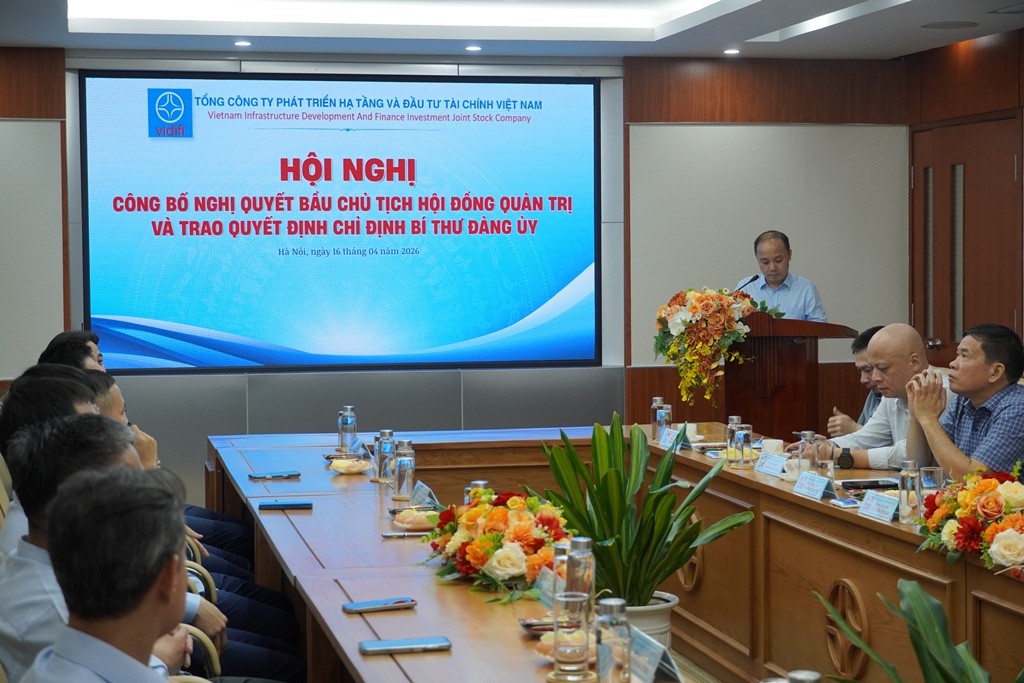
To remove this "bottleneck", the Government assigned the Vietnam Development Bank (VDB) to organize the implementation of the project, contribute 51% of the charter capital, and establish the Vietnam Infrastructure Development and Financial Investment Corporation (Vidifi) as the investor of the route. Vidifi Chairman of the Board of Directors Dao Van Chien said: This is the first time the bank has been assigned by the Government to build a highway. The pilot investment in highway construction without using budget capital and mobilizing from social resources is a breakthrough, creating a premise to continue investing in the construction of other transportation infrastructure projects across the country. In 2007, when Vidii took on the project, many businesses and banks registered to participate. However, when the project was implemented, our country's economy was also affected by the world economic crisis. Inflation increased, bank interest rates soared to 18-20%, causing the project's price to slip "dizzily". Many businesses that registered to invest were forced to quit, but Vidii was still determined to carry out and complete the project.
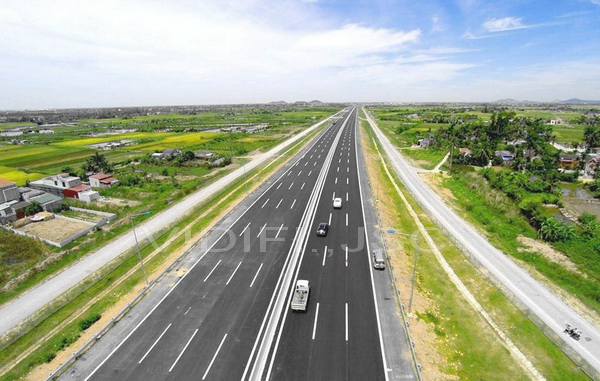
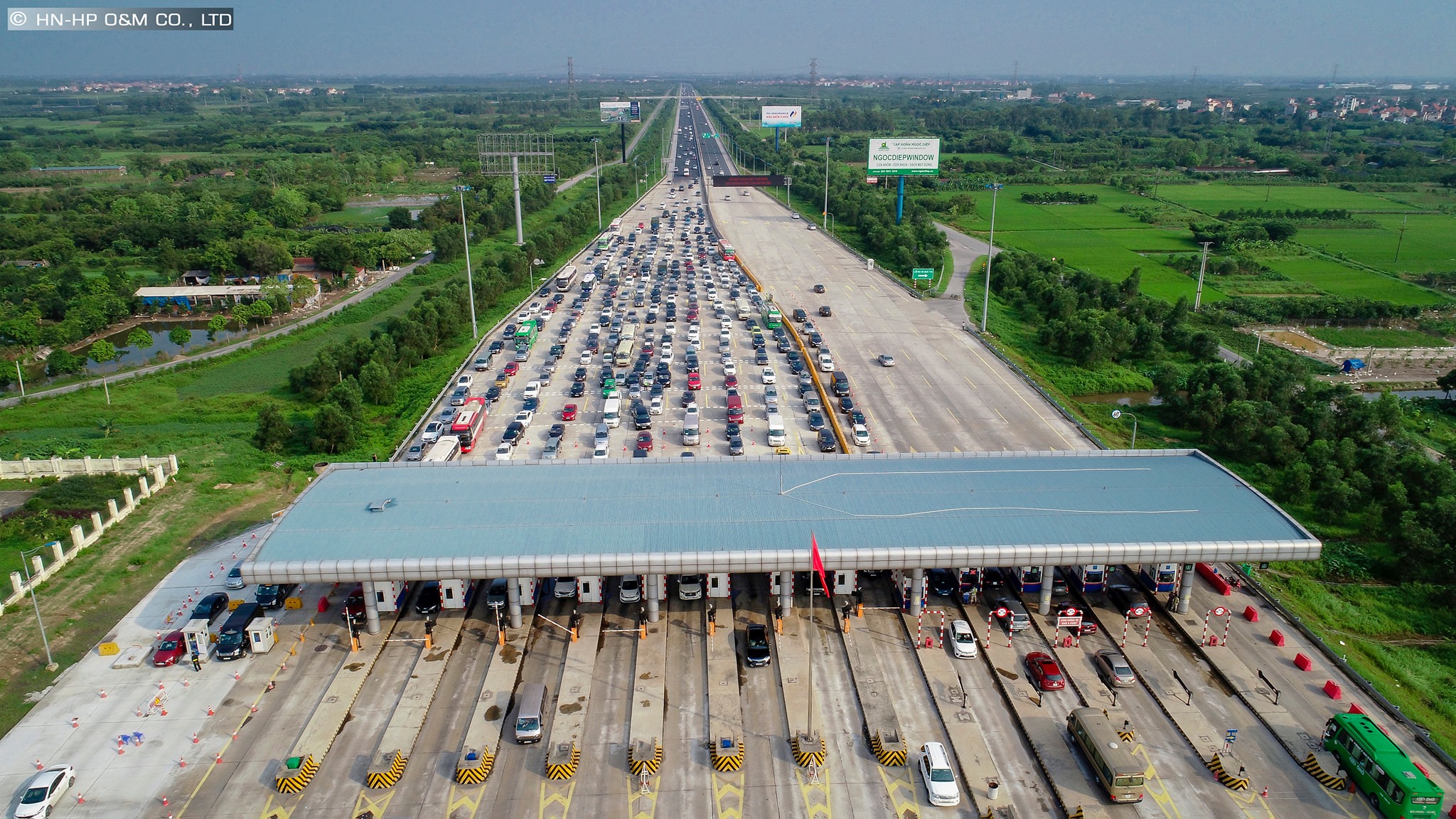
The road section has been formed and put into use. Photo: Doan Viet Ha
To date, Vidifi's capital contribution to this project accounts for more than 96%. Seven years ago (May 19, 2008), the project was started. The project's basic design was conducted five years ago, so many urban, residential, and traffic plans changed, forcing some design solutions to be adjusted to ensure the safety and sustainability of the project. The State Steering Committee for key works and projects in the Transport sector and the Ministry of Transport have requested the investor to adjust and lower the profile along the highway to ensure the sustainability and safety of the project, reducing 30 locations of underground sewers; Add intersection locations between highways and local roads, adjust intersections to suit the organization of closed toll collection. The project is located south of Highway 5, with up to 80% of the route's length lying on soft ground, requiring treatment, loading and waiting for subsidence from 6 to 18 months. Not to mention the route has up to 12 km of bridges, some of which have large clearances for navigation, making construction difficult; Transporting materials is difficult,...
Quality - requirement number 1
With difficulties and challenges both subjective and objective, there was a time when the project was stalled for a long time. In 2014, the total investment of the project was updated and approved by the Prime Minister with a value of 45,487 billion VND. The Prime Minister also approved a number of financial mechanisms and state support policies for the project in the financial plan.
Accordingly, switching to the form of direct State investment of a loan of 200 million USD from Keximbank's source; have a suitable form of conversion or support for a loan of 100 million USD from the German Reconstruction Bank (KfW); The State supports compensation, site clearance, and project resettlement costs (about VND 3,700 billion). At the same time, Vidifi can use land use fees and land rents payable from surrounding urban areas and industrial parks as a source of investment return. With the adjustment and supplement mechanisms allowed by the Prime Minister, the project financial plan is feasible, the investor recovers capital in 30 years, then hands it back to the State. As the first expressway project implemented in the form of BOT in the country, in the financial plan, the project must consider capital recovery in addition to harmonizing the interests of the State and society.
To pay back capital for this project, the toll fee is expected by Vidifi to be 2,000 VND/km/PCU (standard vehicle). Expressway projects, due to the different scale, nature, and requirements of each project, so the investment rates are also very different.
According to calculations, this route converted the average investment capital for 1 km to four lanes, at the end of 2013 (excluding interest and provision costs), about 10.8 million USD/km, reaching the average level compared to other highways in our country that have been and are being built.
Through many route inspections, the State Council for Acceptance of Construction Works assessed that the investor and contractors have established a construction quality management system, basically meeting project requirements and in accordance with legal regulations on construction quality management. Vidifi Chairman of the Board of Directors Dao Van Chien affirmed: Right from the design, the unit has determined that this is the expressway with the highest traffic volume in Vietnam, the highest axle load, and absolute lane separation. Therefore, if quality is not guaranteed, it will be difficult to avoid damage and rutting immediately after being put into operation for a short time. If so, it will seriously affect the effectiveness of the project. Up to now, when the project has prepared to complete the first section of the route, there are still some locations that have not completely stopped subsidence, but are still forced to unload for construction to ensure progress. This section of the route will continue to be monitored and compensated for subsidence during the exploitation process. To date, no serious incidents have been detected that affect the quality of the project.
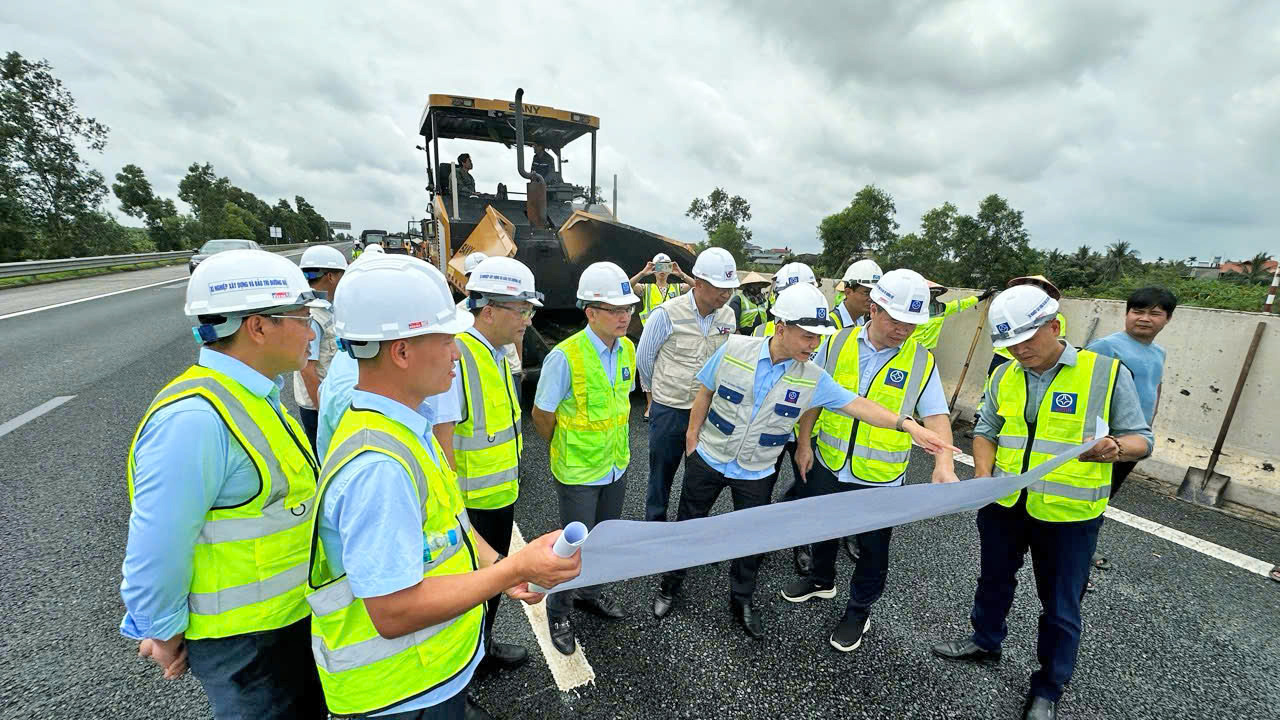
The highlight of the difference in the Hanoi - Hai Phong expressway compared to other expressways is the 5 cm thick layer of rough polymer covering the asphalt concrete surface. Director of the Executive Board of EX19C package Nguyen Ba Hung, in charge of constructing the rough plastic layer, "revealed": This coating has a softening temperature of up to 87 degrees Celsius, exceeding the highest outdoor temperature that the road surface must endure during periods of peak heat. The rutting testing process for this coating gave very good results. Polymer coating not only helps vehicles circulate safely. In case of emergency, when braking suddenly, the vehicle will stop completely and not slide into long streaks on the road. It also helps the road surface drain water well during heavy rain.
To meet the opening schedule of the first section of the project in the next few days, the contractor has mobilized two more asphalt mixing plants along with a set of equipment.
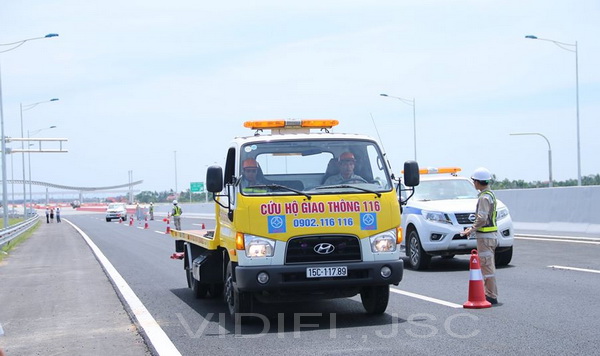
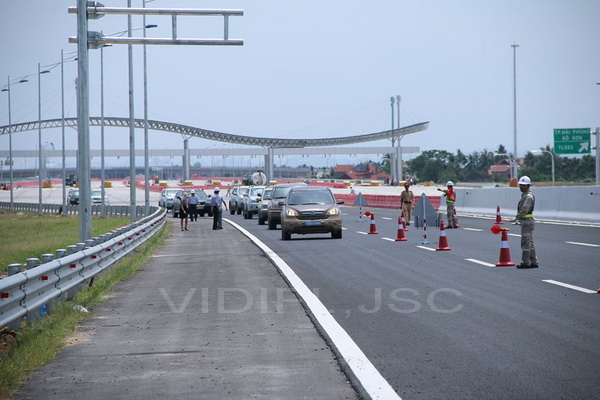
The forces coordinated rescue exercises to resolve incidents on the highway before operating. Photo: Thinh Ngo
As expected, by the end of this year, when completed and put into operation for the entire route, the Hanoi - Hai Phong expressway, along with the Hanoi - Lao Cai, Hanoi - Thai Nguyen, Hanoi - Lang Son, Hai Phong - Ha Long expressways, will form a complete expressway network in the Northern region, greatly shortening travel time for car vehicles to less than half compared to the present, contributing to reducing traffic accidents, costs and transportation time. This route is also located on the Asian and ASEAN road corridor, which will contribute to implementing the cooperation agreement between the Greater Mekong Subregion countries and the Vietnam-China "Two Corridors, One Belt" cooperation agreement, connecting important northern seaports with southern Chinese provinces...
Source: TIEN MINH (People)