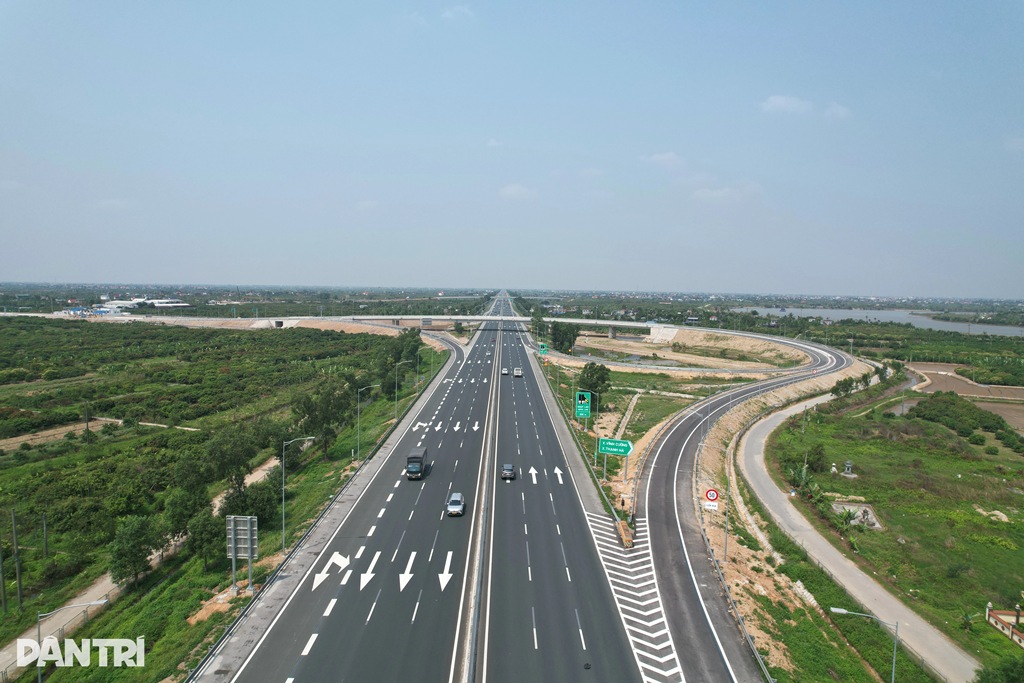
Initial success in land clearance work in Hai Phong City for the Hanoi-Hai Phong Expressway Project


In the winter of 2010, it felt warmer than previous winters, partly thanks to the enthusiasm of the staff and employees of the Vietnam Development Bank and the Vietnam Infrastructure Development and Financial Investment Corporation (VIDIFI) for the Hanoi-Hai Phong Expressway project being implemented in the provinces and cities of Hanoi, Hung Yen, Hai Duong, and Hai Phong.
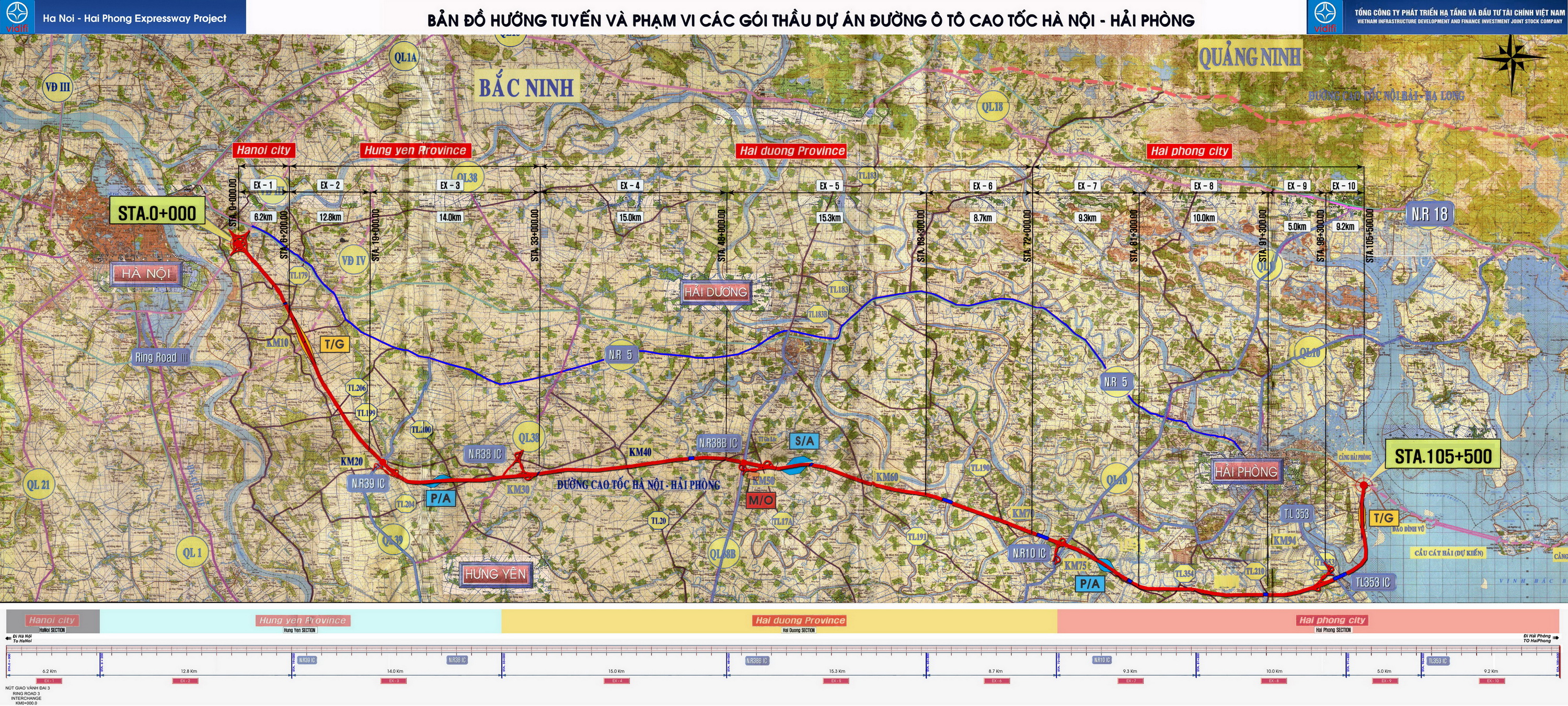
The 105.5 km Hanoi-Hai Phong Expressway, constructed as part of the Asian-ASEAN Road Corridor, falls within the framework of cooperation between the Greater Mekong Subregion (GMS) countries and the Vietnam-China "Two Corridors, One Belt" cooperation framework. It connects important seaports in northern Vietnam with southern provinces of China. Therefore, the early commissioning of this expressway will undoubtedly facilitate increased investment, trade, services, tourism, and cultural exchange. It aligns with Vietnam's road transport development plan up to 2010 and its development orientation to 2020; contributes to completing the road network in the key economic region; and serves as a driving force for the rapidly developing Hanoi-Hai Phong-Quang Ninh economic triangle, attracting investment from both domestic and foreign partners.
Investing in the construction of the Hanoi-Hai Phong expressway ensures progress and quality, in parallel with investing in other synchronized infrastructure projects in industrial zones, urban areas, service areas, and port logistics... in order to maximize the strengths of localities, optimally exploit the potential of economic regions, and contribute to the early recovery of investment capital for the Hanoi-Hai Phong expressway construction.
Following the directive from the Standing Committee of the Government assigning the Vietnam Development Bank (VDB) and the Vietnam Foreign Trade Bank (VCB) to lead the mobilization of capital for the Hanoi-Hai Phong expressway project under the BOT (Build-Operate-Transfer) model; accordingly, the investors, including the Vietnam Development Bank (VDB), the Vietnam Foreign Trade Bank (VCB), the Vietnam Import-Export and Construction Corporation (Vianconex), and Saigon Investment Corporation, contributed capital to establish the Vietnam Infrastructure Development and Financial Investment Corporation - VIDIFI (a joint-stock company) with a charter capital of VND 5,000 billion. The Standing Committee of the Government directly assigned VIDIFI as the investor to implement the Hanoi-Hai Phong expressway project and related infrastructure projects. VIDIFI is not a state-owned enterprise, and the capital used for the projects is not state capital.
VIDIFI is a large, reputable corporation with significant financial resources. The corporation continuously strives to improve business efficiency and achieve sustainable development, supported by a highly qualified and capable workforce. Its operations are professional, its organizational structure streamlined, its management capabilities modernized, its finances transparent, and its focus on market orientation and international integration.
From the initial formation of the Project Preparation Board with about 10 people in early 2007, to the establishment of the Vietnam Infrastructure Development and Financial Investment Corporation (VIDIFI) at the end of 2007, and now, after three years of development, VIDIFI boasts a large and capable staff, including scientists and engineers with sufficient expertise and practical experience in construction projects both domestically and internationally. Thanks to this, VIDIFI has implemented a comprehensive range of activities across various fields, including investment projects in transportation infrastructure, industry, urban development, services, and financial investment.
To date, land clearance for the Hanoi-Hai Phong Expressway Project has progressed positively, achieving very promising results. Local authorities have completed land clearance and handed over approximately 97% of the total area of over 1,000 hectares to the investor. On the handed-over land, the investor has completed the work of searching for unexploded ordnance, clearing the ground, removing the topsoil, and backfilling with materials, ready for the construction of the main construction packages along the entire route. Investment is being expedited to complete nearly 40 resettlement areas, ensuring stable living conditions for thousands of households in the project area. These resettlement areas are becoming increasingly spacious and beautiful, resembling bustling new towns and cities. Simultaneously, VIDIFI is accelerating the construction, relocation, and replacement of electrical, water, fuel, and telecommunication infrastructure, as well as temples, pagodas, health stations, schools, cemeteries, and other public works along the entire route. VIDIFI has meticulously and effectively prepared for the project's material security; political stability in the project area has been maintained; and foreign contractors have good relationships with local authorities. With a sense of urgency, VIDIFI is preparing to implement the Gia Lam Science Park Urban Project in Hanoi next year – a modern, unique, and environmentally friendly project. In addition, VIDIFI has also been implementing several infrastructure investment projects in industrial zones, urban areas, and other service sectors.
In Hai Phong, the investment in the construction of the Hanoi-Hai Phong expressway is also part of the plan to continue implementing Resolution No. 32-NQ/TƯ dated August 5, 2003, of the Politburo on the construction and development of Hai Phong city in the period 2008-2015 and the 5-year socio-economic development plan (2011-2015) of Hai Phong city; affirming the nature and role of Hai Phong as the main gateway to the sea for the northern provinces and an important growth pole of the Northern key economic region, gradually becoming one of the major industrial and commercial centers of the country and a service center of the Northern Coastal region.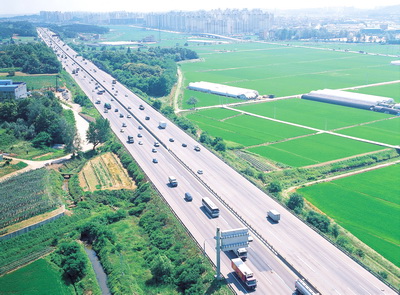
The route starts from the point connecting with Ring Road III - Hanoi City, passing through Hanoi (6 km), Hung Yen (26.5 km), Hai Duong (40 km), Hai Phong (33 km), and ending at Dinh Vu Dam, Hai An District, Hai Phong City. Over the past period, VIDIFI has mainly focused on land clearance and resettlement; simultaneously, land clearance is completed and handed over to contractors for construction as soon as it is cleared. Vietnamese contractors have basically completed the work of searching for and disposing of unexploded ordnance left over from the war, clearing the site, removing organic soil, and backfilling; foreign contractors have been and are carrying out the work of treating weak soil foundations and applying load to await settlement; at the same time, they are proceeding with the construction of bridge piers and abutments over rivers (Thanh An bridge over Van Uc river, Ba La bridge over Ba La river, etc.) or overpasses over Road 353 - Pham Van Dong road - in Duong Kinh, Hai Phong... This phased construction method has many advantages but also faces many difficulties; on the one hand, due to the lack of uniformity and consistency in mechanisms, policies, and regulations regarding land clearance, and on the other hand, due to the insufficient understanding of some people in the project area, causing difficulties and hindering construction, slowing down the project progress. Nevertheless, thanks to the close and decisive direction of the Hai Phong City Party Committee and People's Committee, and especially the VIDIFI leadership, along with the regular coordination of all levels and sectors, and the consensus of the majority of people in the project area, the land clearance and resettlement work for the Hanoi - Hai Phong Expressway Project in Hai Phong City has achieved good results. Statistical data shows that by the fourth quarter of 2010, compensation, support, and land clearance work had been basically completed, with approximately 98% of the land handed over to VIDIFI and the contractors in An Lao and Kien Thuy districts and Hai An district; and nearly 80% in Duong Kinh district. Mine and unexploded ordnance detection and safe construction work was carried out on an area of approximately 358 hectares, and 8 bombs, 22 artillery shells, and other explosive devices were defused. With 13 resettlement areas in 4 districts and counties having received investment in infrastructure development: lighting; water supply and drainage; internal roads, and residents in the project areas are urgently building new houses to welcome the upcoming spring - the Year of the Rabbit. At the same time, they are also actively completing the replacement and relocation of other public facilities.
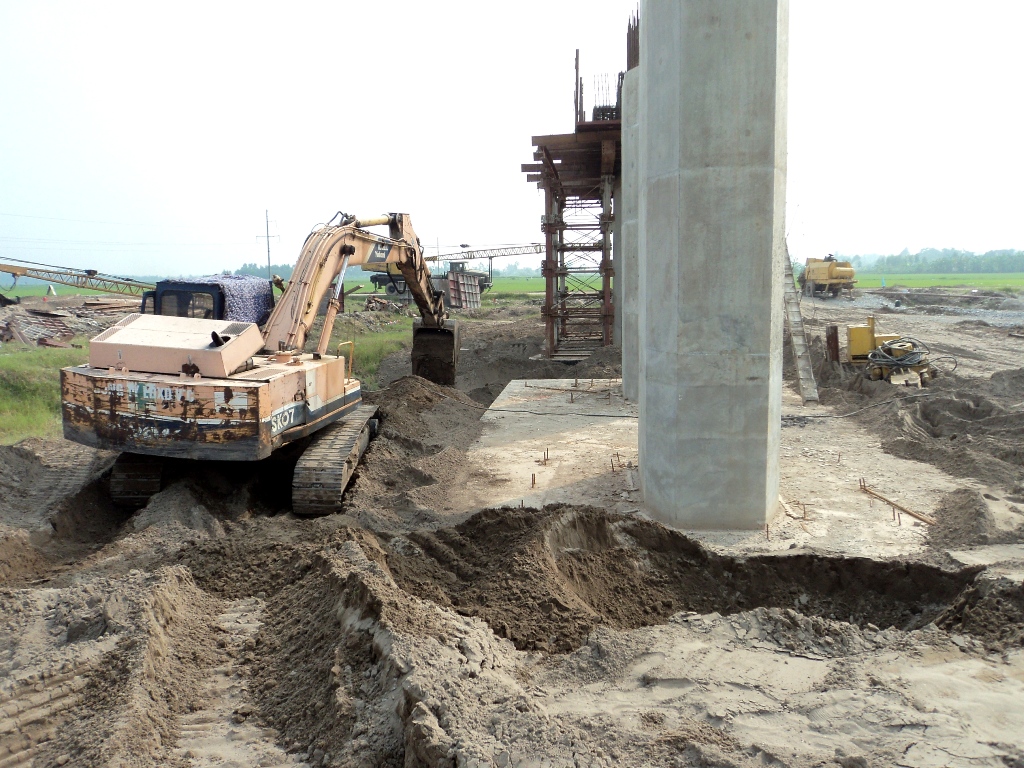 Construction site of the Hanoi - Hai Phong expressway.
In reality, the task of land clearance along a long route is extremely difficult, complex, and challenging due to differing local customs and practices, varying public awareness, and differing policies and regulations regarding compensation, land clearance, and resettlement. However, achieving unified and synchronized implementation across the entire route is even more difficult, requiring project managers to be proactive. Furthermore, resettlement for the project and the relocation of public facilities within the project area must be given early attention, fully and specifically considered, and planned in advance by all levels of local government. In this way, when a "relatively clean" site is handed over, contractors with sufficient capacity and expertise will have to promptly and diligently organize and implement the project according to the agreed schedule in the signed contract, creating sufficient conditions for evaluating the quality of the work as well as the optimal efficiency for the project owner.
Having overcome numerous ups and downs and difficulties, today's initial success is a testament to the burning spirit and enthusiasm of those who have always shown special favor to the Hanoi-Hai Phong expressway. This demonstrates that determination in organization and implementation, decisive action, coordinated direction from the central government to local authorities, thorough administrative reforms at all levels and sectors, timely, correct, reasonable, and appropriate decisions in accordance with the law during implementation, and the consensus of the people in the project area are all crucial, necessary, and sufficient factors for success.
Thanks to the regular and timely guidance of the Vietnam Development Bank, the close coordination with local authorities and sub-project investors, the implementation of the Hanoi - Hai Phong Expressway construction project is progressing strongly and making many breakthroughs, creating momentum for the simultaneous commencement of the remaining main construction packages along the entire route in early 2011. The entire route will be a bustling construction site along its entire length of 105.5 km.
At this point, not only those involved but all those passionate about and always concerned with the Hanoi-Hai Phong expressway are eagerly anticipating the arrival of Vietnam's first modern arterial road. It will be like a magnificent, expansive silk ribbon stretching as far as the eye can see, gently interwoven between lush green trees and vast golden rice fields, upon which high-speed vehicles will travel, appearing from a certain height like endless rows of matchboxes of varying sizes. It will be a valuable gift today for future generations.
Quang Tu
VIDIFI Hai Phong Office